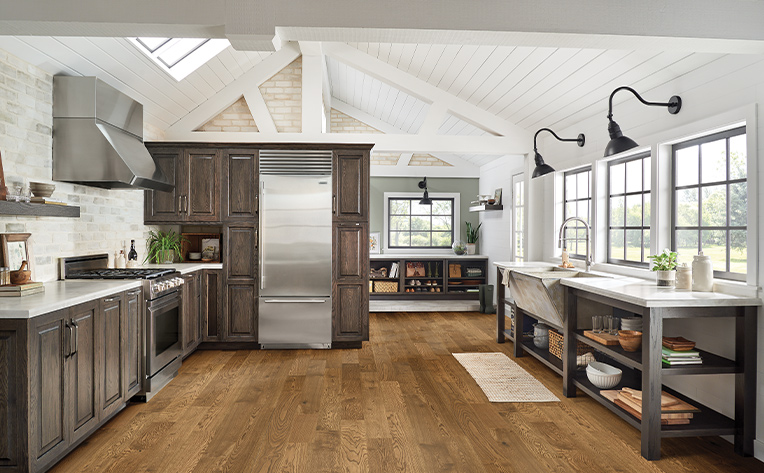
Engineered hardwood gives you the look and warmth of real wood with better stability across a wider range of spaces. If you're weighing your options, here's what matters most before you decide.
Engineered hardwood flooring combines a real wood veneer with a layered plywood core, giving it better stability than solid wood across changing humidity and temperature conditions. For a full overview of how it's made and why homeowners choose it, see our complete guide to engineered hardwood flooring.
Engineered hardwood is built for real homes. Here's why it's a popular choice for homeowners looking for hardwood beauty with added practicality.
Engineered hardwood flooring is available in a wide variety of wood species, colors, and finishes, allowing you to create a beautifully customized space that suits your design preferences. Unlike traditional solid hardwood, engineered hardwood is designed for enhanced durability and water resistance, making it suitable for installation in moisture-prone areas like kitchens and basements. Its sturdy construction ensures long-lasting performance while maintaining the natural beauty of hardwood, making it a smart and stylish investment for any home.
Engineered hardwood flooring is a favorite for its durability and versatility, but like anything, it has its drawbacks. One thing to keep in mind is that it’s not fully waterproof. While it handles moisture better than solid hardwood, areas like bathrooms where water tends to stick around might not be the best fit. Over time, too much moisture can still cause wear. And while it’s tougher against scratches and dents than solid wood, it’s not completely invincible. Use furniture pads and area rugs to help protect it.
Solid hardwood is milled from a single piece of natural wood and can be refinished multiple times, giving it a very long potential lifespan. Engineered hardwood is built with a real wood veneer over a cross-layered plywood core, which makes it more dimensionally stable across changes in humidity and temperature. Both are made from real wood, but engineered hardwood adapts to a wider range of environments and installation types. For a deeper look at solid hardwood, visit our hardwood flooring FAQs.
Pro Tip: Depending on the veneer thickness, engineered hardwood may have limited refinishing potential or may not be refinishable at all.
Yes, engineered hardwood flooring is water-resistant, making it a smart choice for moisture-prone areas. Thanks to its unique crisscross construction of core layers, engineered hardwood is more stable than solid wood, resisting expansion, contraction, and shifting caused by humidity, moisture, and temperature changes. This makes it ideal for spaces like basements, over concrete slabs, or with radiant heating systems. However, while engineered hardwood withstands moisture better than solid wood, it is not fully waterproof. Prolonged exposure to water or high humidity can still cause swelling or warping. To maintain its durability, promptly clean spills, use a dry mop, and perform moisture testing on the subfloor before installation. With proper care, engineered hardwood offers resilience and style in moisture-prone areas.
Engineered hardwood flooring is known for its impressive durability and long lifespan. Well-maintained engineered hardwood can last 20 to 30 years or longer. Factors like the thickness of the top veneer layer, the quality of the materials, and proper care all play a significant role in its longevity. Regular cleaning, avoiding excessive moisture, and refinishing where the veneer allows can help maximize the life of your floors and protect your investment over time.
Engineered hardwood is more scratch-resistant than many people expect, but it is not scratch-proof. The durability of the surface depends largely on the hardwood species used for the veneer. Harder species like oak, hickory, and maple hold up better to everyday foot traffic, furniture movement, and pet activity. Softer species show wear more readily. Felt pads under furniture legs, area rugs in high-traffic zones, and prompt attention to spills and grit will all extend the life of the finish.
Engineered hardwood typically costs less upfront than solid hardwood, in part because its layered construction uses less solid wood overall. Installation costs are also often lower, since engineered hardwood can be floated, glued, or stapled depending on the subfloor. Compared to laminate or LVP, engineered hardwood sits at a higher price point, but it offers the authenticity of real wood and refinishing potential that neither of those options can match.
Engineered hardwood performs well across a wide range of spaces, but there are a few environments where it is not the right choice. Full bathrooms are not recommended, since standing water and chronic humidity can cause swelling and finish deterioration over time. Areas with extreme or rapid temperature swings, such as unheated sunrooms or spaces near exterior doors in cold climates, can stress even a stable engineered floor. Any space with known moisture intrusion or active water problems should be resolved before considering engineered hardwood. When in doubt, moisture testing before installation is always the right first step.
Neither is universally better. They solve different problems. LVP is fully waterproof, typically less expensive, and softer underfoot, making it a strong choice for high-moisture rooms or households focused on budget and durability. Engineered hardwood is real wood, which means a warmer look and feel, the possibility of refinishing, and better long-term value in the right environment. If waterproofing is the top priority, LVP wins. If authenticity and the look of real hardwood matter more, engineered hardwood is the better fit. For a closer look at vinyl options, visit our LVP flooring FAQs.
Caring for engineered hardwood floors doesn't have to be complicated. Here are some answers to the most common questions about keeping your floors looking their best, from routine cleaning to handling scratches and everyday wear.
Engineered hardwood floors are simple to clean and easy to care for, even in busy households. Their durable surface holds up to spills, light scratches, and daily traffic, and regular upkeep keeps them looking great for years.
A soft broom or microfiber mop handles everyday dust and dirt without risking scratches. For a quick refresh, a damp cloth works well, but avoid steam cleaners or excess water, since even moisture-resistant engineered hardwood has limits. Use gentle, wood-safe cleaners and avoid harsh chemicals that can dull the finish. Check your manufacturer's guidelines for cleaning recommendations to keep your floors looking great and your warranty intact.
For small scratches, a touch-up kit or wood filler made for your floor's finish can minimize the appearance of damage. Buff gently with a soft cloth after applying. For deeper gouges, water stains, or larger damaged areas, a professional can assess whether a repair will do the job or whether sections of the floor need to be replaced.
Protect your floors by adding felt pads to furniture legs to prevent scratches and clean up spills promptly to avoid moisture damage. In high-traffic areas, area rugs go a long way toward reducing wear. Regular sweeping or vacuuming also helps keep dirt and debris from dulling the finish over time.
